
(A Memoir of R.M. Goetz)
Late November 1972
David Bowie &
the Spiders From Mars
@ Stanley Theatre
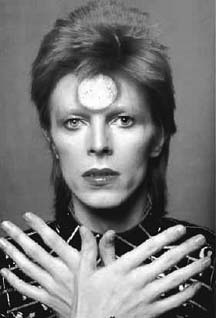
Now you've gotta understand that by the time me and my pals Danny Anderle and Curt Evans saw him in late '72 Bowie was it. The prettiest star, the homo-superior, our progenitor and avatar. We'd been feeding on the Mainman (Bowie's management headed by Tony Defries; at one point Mainman represented Bowie, the Stooges, and Lou Reed) glam-rock media machine for the past six months or so via Rolling Stone, Cream, Hit Parader, Zoo and whatever other rock mags were out there. RCA records was obviously dedicated to breaking Bowie as a nationwide one-of-a-kind megastar. Sure he was identified as part of a 'movement', but at the same time he was catapulted so far above it. I remember the fey record clerk in the National Record Mart on Forbes Avenue downtown practically fainting upon viewing color photos of David's stage show in R. S.
So off we went to the Stanley Theatre (now Benedum Center) and, upon arriving at the Event, joined a line that stretched two blocks, up 7th Avenue. The Stanley was your typical decaying urban film and theatre venue by the early 70’s. For an 8 o’clock show management would open one door at 7:30 for oh, 500 people. The Bowie show was particularly awful, as me and my friends were pushed with crushing effect into the spinal columns of the unfortunate people in front of us.
Now, lining each side of the theatre entrance were glass enclosures that featured coming attractions. So many people were pressed against the panes that they eventually shattered, spraying deadly irregular shards (safety glass was a thing of the future) all over the folks immediately behind us.
After a few teenage-enabled contortions, we spilled into the Stanley s’foyer. There on a centrally placed table were all manner of Bowie merch: handbills, programs, photos. The butch-blonde alien boy of the Ziggy cover was gone; in it's place drag glamour that almost hadn't been defined yet. We sat in the back, underneath the balcony. If there was an opening band, they've been lost to the dustbin of memory.
Bowie and the Spiders were the loudest thing I ever heard in my life. I was awestruck by Mick Woodmansey's drumming; his bass drum sound was Bonhamesque, but he played much faster and on the beat. On the Ziggy material and the other rock songs the band was razor-sharp; the folk-vaudeville-styled tunes didn't fare as well. Bowie couldn't get his 12-string in tune for “Space Oddity”, but he went ahead and did it anyway; as he sang he “ascended” the left hand side of the stage (nylon strings and pulleys? I don't know) to alight in a side viewing box.
Near the end of the set, kids down front started yelling for Velvets songs. I was totally amazed by this, since like every other teenage Velvets fan at that time I thought me and my friends were the only ones who knew about the band. Anyway Bowie said they did “I'm Waiting For My Man” and “White Light White Heat” so “White Light White Heat” it was. The Spiders' version was pure propulsive kinetic energy and feedback. Mick Ronson's lead guitar was all volume and sustain; notes and phrasing were secondary.
This gig became legendary among even my far circle of acquaintances. It became a hipsters' badge of honor to have been there especially after Bowie abandoned the Ziggy persona less than a year later.
Mid-April 1973
Lou Reed & The Tots / Genesis
@ Alpine Ice Arena
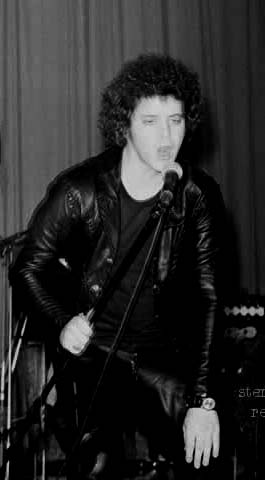
“Rock critic” Scott Mervis of the Post-Gazette referred to this gig as a Velvet Underground show a couple of years ago (as if there was no difference) which shows how much he knows about rock n’ roll. Before I get into the specifics, let me just say that the Lou Reed I saw in 1973 bore no resemblance whatsoever to the singer and writer that I had absolutely worshipped from December ’68 (when I first heard the Velvets) until this sodden, pathetic, spite-filled performance.
As all acolytes know, when Lou re-emerged as a solo artist in '72 he was dead-on-arrival; alcohol and downs had apparently replaced met amphetamine as the inspirational drug-of-choice, along with an absolutely obvious case of meta-paranoia thrown into the cocktail. His back-up band at this point consisted of some teenagers from Long Island (hence the Tots) assembled by Steve Katz (who matriculated from Blood, Sweat, and Tears to managing Lou Reed. Hmm). Of course all of us Velvets fans out in the hinterlands had no idea of our hero's sudden and immediate decline. Even though we thought Transformer was a piece of fluff (albeit comic, hard-rocking fluff), it never occurred to us that Lou had lost his ability to rock out (whether he's ever regained it is certainly open to question).
In the parking lot before the gig, while we hung out with Genesis groupies that all wanted to sleep with Peter Gabriel, we could hear Lou and the kids doing "Wagon Wheel", one of the more moronic (but funny) songs off Transformer. They sounded pretty good, but I guess Lou hadn't gotten into the Johnny Walker Black yet.
My classically-trained pianist friend Brice Perry had raved to me about Genesis. Brice didn't like rock n' roll and thought that rock musicians were beneath contempt, but he admired the proper musical structures of bands like Yes and Genesis and Gentle Giant and King Crimson and blah, blah, blah. Actually I liked a lot of this crap myself, and I have to admit that Genesis with Gabriel was the cream of the crop. Still, I defy you to listen to The Lamb Lies Down On Broadway all the way through. Or even worse, Tales of Topographic Oceans. But back to our story.
Genesis was quite the opening act. They played most of their epic Nursery Cryme, an elegiac ode to 19th century English country life as imagined by William S. Burroughs, plus a few songs from their new dada-psych masterpiece Foxtrot. Costumes, theatrics, a singer with a two-inch wide bald streak shaved straight down the middle of his head, now that's entertainment. At the end of their set there was an incredible flash as roadies set off pots of gunpowder aimed toward the audience. When the smoke cleared, the band was gone!
About 40 minutes later, the stage lights came up, and there He was - a short, squat, slightly tubby guy dressed in black leather with a medium-sized ‘fro and a pretty vacant attitude, pumping his knees in time to the beat in an idiotically suggestive fashion. After four or five songs, it was obvious that this was not the Velvet Underground. Lou seemed determined to punish his old fans by any means necessary, be it lackadaisical, spur-of-the-moment arrangements, plod-along tempos, and especially his attempts to: improvise melodies which resulted in a lot more mumbling than singing.
Things hit a high point during “Sweet Jane”, when Lou momentarily remembered how to sing it. The light soon went out, however, leaving us once again with no Lou home. I also remember wretched versions of “New Age” and “Walk On The Wild Side” (he intentionally blew the tag line of his “hit” - over and over and over).
Even though I defended him to my friends, said I thought the show was great, etc., etc., in my heart of hearts it was so deflating. I suppose you could rationalize Lou's decision to destroy his myth as a good career move; clear the decks and lower expectations while marketing yourself as a drug-addled freak. It worked for a while, too. So the moral of this nostalgia, kids, is that sometimes rock-n' roll is about condescension and sadism and psychic disintegration of the self that defies balance and closure.
Summer 1973
Mott the Hoople /
Blue Oyster Cult /
New York Dolls
@ Alpine Ice Arena
In retrospect, this was such an odd line-up. Mott the Hoople and the Dolls would have made sense; in fact it would have been too hip a billing for the Pittsburgh market in 1973. BOC was added undoubtedly to attract the boogie-down stoner element. Not that glam kids didn'pt like to do drugs but, ah, I don't want to get into that.
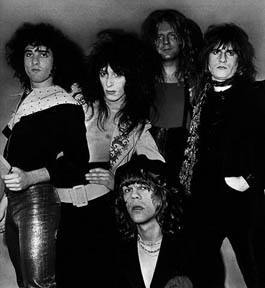
Anyway, the New York Dolls were definitely the flavor of the summer; one oft-played radio ad featured David Johansen talking about the band's origins in his Brooklyn patois: "We were just a bunch of kids hanging around Max's [Max's Kansas City, famous Warhol hangout and site of the Velvets' last stand in August 1970] and somebody told me 'you guys ought to be in a band'," etc., etc., etc. Unfortunately, live the Dolls sounded like a bunch of cute cross-dressers (straight it turns out) who picked up instruments as a fashion accesory.
Now I know they were great, I know they're legends, I know they inhabited the spirit of rock n' roll (at least until Johnny and Jerry got into junk - by the way, what are the politics of boredom?) but the Dolls were terrible. I bet they didn't get a soundcheck, and they had no room to move around on stage, or maybe the venue wasn't intimate enough. To me it was even worse than Lou and the Tots since at least Lou had recognizable songs no matter how badly he performed them. From what I could tell, the Dolls didn't even have songs, just an ultra-decadent pose that lacked any Dionsysian depth.
Mott the Hoople was a completely different story. In contrast to the Dolls' jerk-off and Blue Oyster Cult's intellectually bankrupt heavy-metalisms (as with so many others, the first two BOC records are quirky, feisty, clever and facile both lyrically and musically; after that, their ideas began to calcify). Mott was indisputably the real thing. After failing miserably (i.e. not selling records) for years with their own twisted blend of hard-rocking solipsism (Brain Capers, Mott's last LP before Bowie is probably as close as you could get to punk in 1972), Mott had finally become headliners in the wake of Bowie's patronage.
"All the Young Dudes" is probably the ultimate glam moment; a first-person statement of unself-conscious dissolution, the narrator scorns any engagement with the world that doesn't reflect his own alienation. The 60s were done, over and dead, ludicrous in retrospect; "My brother sits at home with his Beatles and his Stones, but I never once got off on that revolution stuff. What a drag - Too many snags."
Don't trust your parents, kill your idols, and just say no, Adorno (how very punk rock). "The television man is crazy, sayin' we're juvenile delinquent wrecks. Ah man, why do I need TV when I got T. Rex? I'm a dude man." When Mott played "Dudes" as their encore, and Ian Hunter started his fade-out rap about "I wanna see you, you... down front with the glasses..." I didn't know it was on the record. I thought he was talking to me.